

A photography blog covering: Digital, Film, Reviews, History, Cameras, Images, Technique, Stock Photography, and pretty much anything else photography related that comes to mind...with special coverage of Fujifilm X, Nikon, Sony, and Leica cameras.
Monday, March 7, 2016
City dreaming
I spent some time last night working on a composite image using a photo of a model we did in the studio last week along with a photo of the city in a mist and another of a cloudy sky. The clear sphere was created in Photoshop.

Sunday, March 6, 2016
Going for a dark mood -- Fuji X camera and lenses
I'm just finishing up editing the images I took on my recent trip to the Dominican Republic. When selecting the location for my trip I was particularly interested in the look of the beach for some sea photos I had in mind. After doing some straight, commercial photography all day long, I switched over to something moodier as the sun set.
I took both a Nikon D750 and Fuji X-T1 kit with me on the trip, but ended up using the X-T1 for over 90% of my shooting. That small Fuji kit with its ease of focusing on the screen was just too tempting not to use. I also had a Fuji 16-55mm f/2.8 and the new 100-400mm with me and was anxious to try both of them out.
Many of the moody shots were done with a fog filter on the lens. This flattened out the contrast. Later in post-processing I added the contrast back in, which negated much of the fog effect, but created a deep, monochromatic mood to the photos.


I took both a Nikon D750 and Fuji X-T1 kit with me on the trip, but ended up using the X-T1 for over 90% of my shooting. That small Fuji kit with its ease of focusing on the screen was just too tempting not to use. I also had a Fuji 16-55mm f/2.8 and the new 100-400mm with me and was anxious to try both of them out.
Many of the moody shots were done with a fog filter on the lens. This flattened out the contrast. Later in post-processing I added the contrast back in, which negated much of the fog effect, but created a deep, monochromatic mood to the photos.
 |
| This was one of my favorite images of the sun breaking out from above and behind some storm clouds and a sail boat making its way from the light towards the darkness. |
Saturday, March 5, 2016
First photo with the X-Pro2
I've had my new Fuji X-Pro2 for a couple of days, but haven't had much time to play with it yet. I did carry it around as I ran some chores, which is when I grabbed the shot of the Flatiron Building with some winter storm clouds passing overhead.
At first glance I am impressed with the increased resolution and high ISO capabilities of the new 24mp sensor. The thumb joystick is fantastic but is going to take some getting used to. Old habits die hard and I am so used to working with the control buttons on my X-T1, which I had reprogrammed to move the focus point. Now I keep inadvertently hitting the menu options with the new control buttons.

At first glance I am impressed with the increased resolution and high ISO capabilities of the new 24mp sensor. The thumb joystick is fantastic but is going to take some getting used to. Old habits die hard and I am so used to working with the control buttons on my X-T1, which I had reprogrammed to move the focus point. Now I keep inadvertently hitting the menu options with the new control buttons.
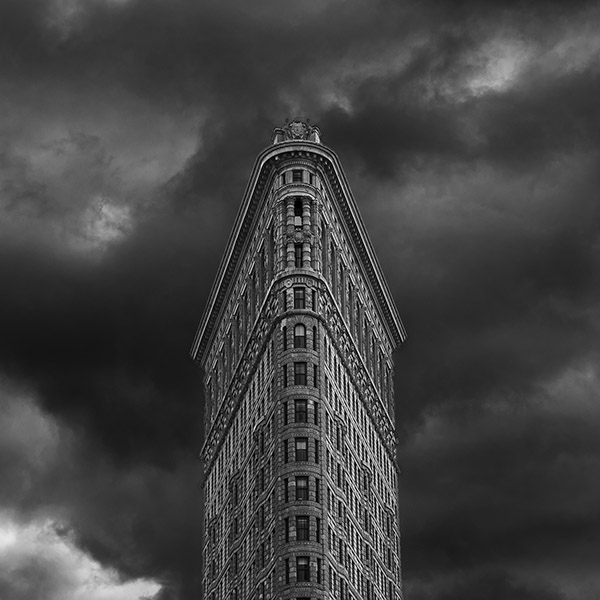 |
| Was this the final gasp of winter? Photographed yesterday with my new Fuji X-Pro2 and 16-55mm f/2.8 lens. |
Thursday, March 3, 2016
Fuji 100-400mm lens, a first look
Lens focal lengths have specific characteristics that make them suitable for particular tasks and compositions. Super-teles compress space onto a flat plane teasing us to create abstractions of juxtaposed forms. I love working with super-teles for this reason, although their extremely narrow field of view can sometimes be limiting for daily shooting.
I have been photographing with the new Fuji 100-400mm zoom for a couple of weeks in preparation for an extensive, hands-on review. Before completing my tests, I want to see how the lens handles with the higher resolution X-Pro2. In the interim, I thought I'd pass along a few recent examples I took with the lens, both by itself and coupled with the Fuji 1.4x teleconverter. Below are a few examples I took of the city at sunset last night.
The lens is incredibly sharp, even into the edges and corners, with very little loss of quality from the added extender. It is a large lens, but not as large as you might typically expect from such a long focal length so that it is hand-holdable during the day when the light is bright enough for short exposures. The low light photos here were all taken on a tripod.


I have been photographing with the new Fuji 100-400mm zoom for a couple of weeks in preparation for an extensive, hands-on review. Before completing my tests, I want to see how the lens handles with the higher resolution X-Pro2. In the interim, I thought I'd pass along a few recent examples I took with the lens, both by itself and coupled with the Fuji 1.4x teleconverter. Below are a few examples I took of the city at sunset last night.
The lens is incredibly sharp, even into the edges and corners, with very little loss of quality from the added extender. It is a large lens, but not as large as you might typically expect from such a long focal length so that it is hand-holdable during the day when the light is bright enough for short exposures. The low light photos here were all taken on a tripod.
 |
| The Verazanno Bridge in the background is over ten miles away, and the near building facade on the right is only a few blocks from where I took this photo compressing all the space in between into a flat composition that meshes all the forms into one, flat composition. This is the sort of composition I love about super-teles. |
Sunday, February 28, 2016
Ocean views with the Fuji X system
Finally back on line! When I wrote my last post, I mentioned that I might be out of internet range for awhile. Turned out to be true. I had no connection at all for the past week. I never think about how internet-dependent the world has become until I have to do without it.
I arrived home late last night, unpacked, downloaded my images onto the computer, and passed out. This morning I began to look over some of what I had done, and decided to put up at least a few images to break the radio silence.
I was shooting mostly with the Fuji X-T1 and 16-55mm lens. I was also testing out the new Fuji 100-400 lens for a later review. I played around a bit with another image softening technique by simply adding a couple of fog filters. Below are a few of the initial results. Much more to come later.
I arrived home late last night, unpacked, downloaded my images onto the computer, and passed out. This morning I began to look over some of what I had done, and decided to put up at least a few images to break the radio silence.
I was shooting mostly with the Fuji X-T1 and 16-55mm lens. I was also testing out the new Fuji 100-400 lens for a later review. I played around a bit with another image softening technique by simply adding a couple of fog filters. Below are a few of the initial results. Much more to come later.
 |
| The sun coming up behind me reflects off the distant clouds. This image and the one at the bottom were taken with the Fuji 16-55mm lens. |
 |
| Distant clouds at sunset taken with the Fuji 100-400mm zoom. |
 |
| Early morning full moon sets over the ocean. A fog filter was used in all of these shots, with the softening effect toned down as I increased the image contrast later in Photoshop. |
Sunday, February 21, 2016
Putting it all together
A few days ago I posted a portrait of this model in a mini review of the Fuji 16-55mm zoom. The purpose of taking the photos, however, was to combine them with other images and create dreamlike images. Here is one I just did using a sunset forest photo as the background.

I will be travelling to warmer climes for the next week. Hopefully, I will be still able to upload to the blog. If not, I will try to post as soon as an internet connection becomes available.
Friday, February 19, 2016
Passing rain storm in the city
We had a warm front move through New York this past week leaving considerable rain and very fast moving clouds as it dissipated just after sunset. I was fortunate enough to have a good vantage point for the sunset and all of lower Manhattan and the Hudson River.
Normally I would shoot a subject like this by making several passes with a camera. With the clouds moving so rapidly, however, the scene was changing significantly with every frame I took. So I decided to take the photo in one shot. For this I chose the high, 36mp, Nikon D810 camera, figuring this would provide me with the largest sharp image in one take.
As I mentioned, the scene was changing rapidly, so I ended up with several different interpretations of the event:
First a black and white shot with a deep, dramatic sky that opened up to light the Hudson River.

Second was a vertical color shot with crisp, eerie light falling on the Flatiron Building with the World Trade Center and lower Manhattan behind it. For this image, rain water was still shiny in the streets,and the shutter speed was fast enough to stop most of the action from pedestrian and automobile traffic.

Last was a night time shot of the city. Normally, by the time this shot would be taken the sky would be black. Instead there was a red glow on the clouds and blue cast to the sky, all while the city lights were bright enough to record.


Normally I would shoot a subject like this by making several passes with a camera. With the clouds moving so rapidly, however, the scene was changing significantly with every frame I took. So I decided to take the photo in one shot. For this I chose the high, 36mp, Nikon D810 camera, figuring this would provide me with the largest sharp image in one take.
As I mentioned, the scene was changing rapidly, so I ended up with several different interpretations of the event:
First a black and white shot with a deep, dramatic sky that opened up to light the Hudson River.
Second was a vertical color shot with crisp, eerie light falling on the Flatiron Building with the World Trade Center and lower Manhattan behind it. For this image, rain water was still shiny in the streets,and the shutter speed was fast enough to stop most of the action from pedestrian and automobile traffic.
Last was a night time shot of the city. Normally, by the time this shot would be taken the sky would be black. Instead there was a red glow on the clouds and blue cast to the sky, all while the city lights were bright enough to record.
Subscribe to:
Posts
(
Atom
)