Monday, August 2, 2021

Leica Summarex 8.5cm f/1.5 - an old dog with new tricks

The Leica Summarex 8.5cm f/1.5 lens was originally designed in 1936 by Max Berek but had a production run from 1943-1960. It is quite rare in that only 4066 silver and 276 black versions were made. The one shown below was manufactured in 1951. 

I just sold this lens on eBay and was intrigued by a question the buyer asked me about it. He wanted to know if the lens was up to the resolution status of a modern M10 Leica camera, which is how he planned to use it. My curiosity was piqued so I mounted it on a Nikon Z6 camera and took it outside for a test run. I have to admit to being extremely surprised at the high-quality images delivered by this vintage lens. It was sharp, even when used wide open at f/1.5. But the really pleasant surprise was the unique bokeh effect it displayed when used wide open.

The lens mount is solid metal and quite heavy with its 5 groups of 7 elements. The controls take a bit of getting used to because of the way the barrel turns as you focus it.

The optical design is made up of one major hunk of glass!


You will need two adapters to mount the screw-mount Summarex lens onto a Nikon Z-camera. On the left is the Fotasy Leica-to-Nikon-Z adapter, and on the right is a Leica screw mount to Leica M bayonet mount. This Fotasy Leica-to-Nikon mount only accepts a Leica bayonet mount lens.

This is how I normally imagine a Summarex lens -- mounted on something like a Leica IIIG camera with an 8.5cm viewfinder accessory and Leicavit rapid advance base.

Below are some of the test images I did with the Summarex mounted on a Nikon Z6 camera body. All images were taken with an aperture value between wide open at f/1.5 and stopped down to only f/2 or f/2.8. Note, too, that there is no vignetting in these pictures. 


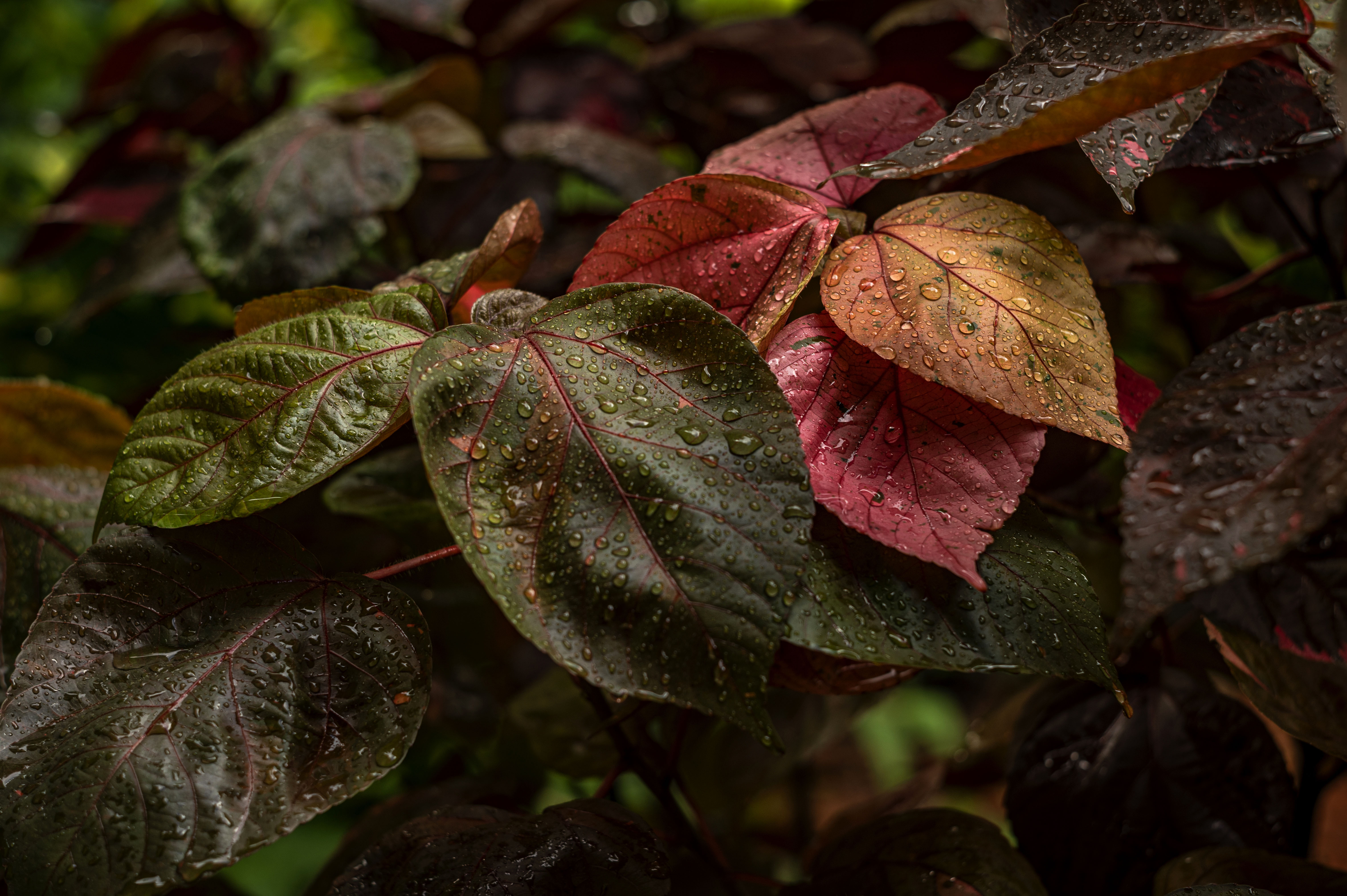
The colors, contrast, and sharpness achieved by the Summarex, even at very open apertures are quite amazing for a lens of its age. We have to keep in mind also that it has none of the very sophisticated coatings of a modern-day lens. Click here to download a high-res file of this image.


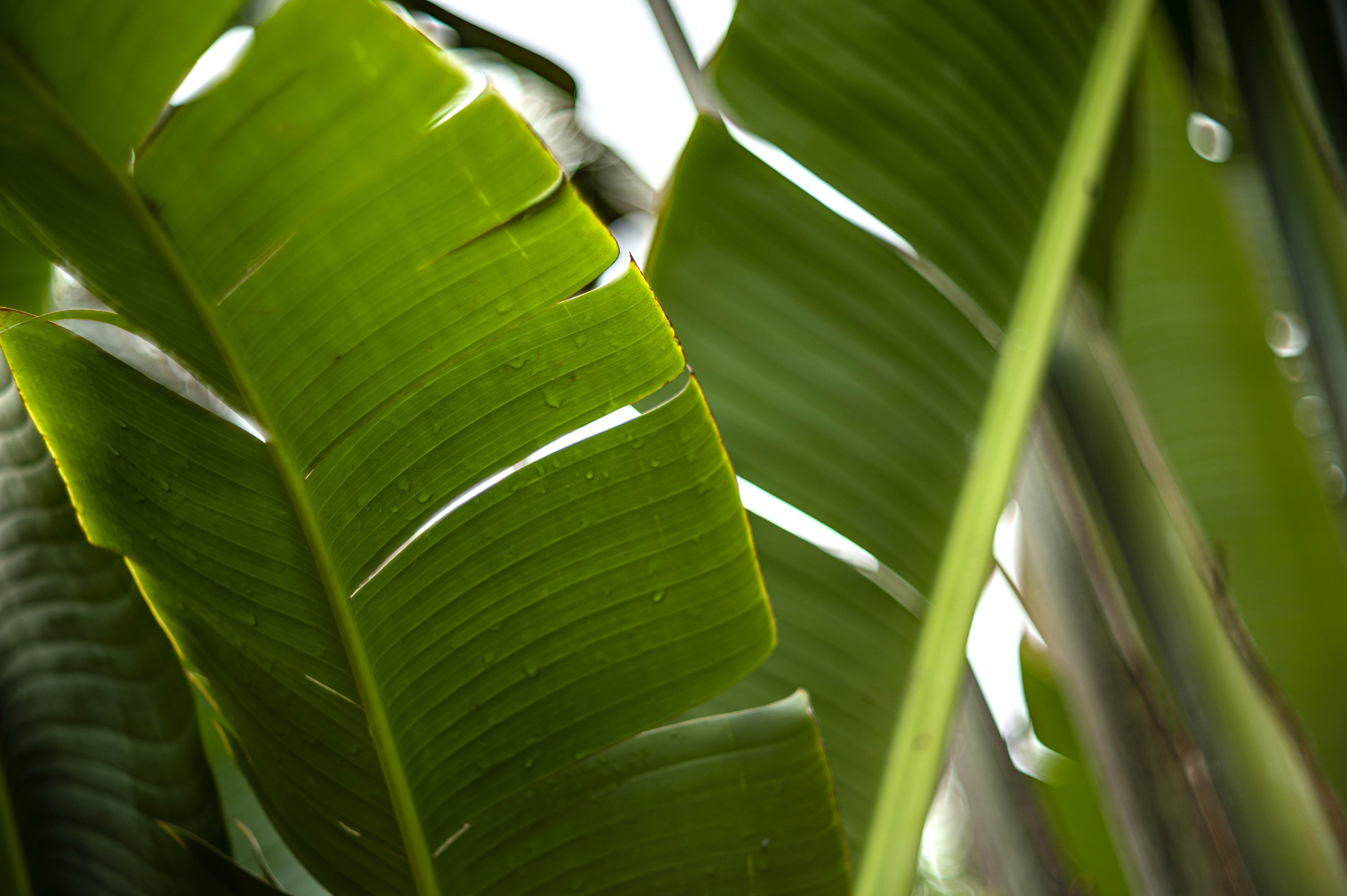
This image -- shot at f/1.5 -- shows the beautiful bokeh effect in the out-of-focus areas behind the foreground palm leaf. Click here to download a high-res file of this image.

One of the chief advantages of using an older lens like this Summarex is that it can deliver a softness in the out-of-focus areas that is very appealing in a very different way from the bokeh of more modern coated lenses. The Summarex was introduced in 1943 as an uncoated lens, which accounts for some of suffused, glowing light in the softer areas of the photographs. 


Thursday, August 20, 2020

Still Life Passages

For many years I have been photographing foliage, not in its springtime glory, but in its process of decay, or what I call "passage". This series of still life images records objects passing from one life form to another, as they succumb to the laws of nature and the passage of time. I have tried to capture the sculptural beauty resulting from this process. 

In this current series of photos I added other objects to the compositional mix with the folliage, objects that share a similar fate of being reformed by nature during the passage of time. This transformation may take the form of rust, decay, color fade, or the complete morphing into another form.

Taken with a Nikon Z7 and 60mm Nikkor macro lens at f/22. Lighting was with a single Godox AD200 Pro flash through an umbrella. I added a dark, textured background surface of rusted metal to each shot instead of keeping them on a dead black. 


Tuesday, July 14, 2020

If Turner had a camera

The English painter, William Turner, was known for the intensely colorful way he painted his sunsets and sunrises, as in the painting below. Whenever I encounter an extremely colorful sunset or sunrise, I always think of him.  This time I was photographing the sky in normal daylight when I encountered what I term a "Turner effect". 


I was out photographing the sun peaking through a heavy sky full of cumulus clouds. I was using a Nikon Z6 with the latest 24-200 mm f/4-6.3 zoom lens because it could cover such a broad focal length that allowed me to form the scene into multiple compositions by going from extremely wide to telephoto.

As I began photographing directly into the sun, which was shining brightly from behind a thin area of the clouds, I noticed that the edges of the image took on a kaleidoscope of colors. The color effect only lasted for a short time, just long enough for me to grab a few images. I was using a shutter speed of 1/8000 and an aperture that varied from f/11 to f/22 to capture the two images below.


While the colors were there in the original, RAW file, I did enhance them somewhat and also adjusted the exposure in post by lightening up the shadows and bringing down the highlights.  For shots, like these, where I want the colors to really pop, I convert the image to the LAB color profile in Photoshop and increase the color intensity there before re-converting it back to RGB. LAB has a far more extensive color range in which to work.


Thursday, July 9, 2020

Concepts of solar energy

This week I decided to turn my creative photo attention to solar energy - an important enough topic and one that is constantly in the news.  So, I picked up a solar panel and went at it. While I did take some specific shots of just the panel, for the most part, I've been stocking up on simple images of the panel that I can use to construct more complex images in Photoshop. Below are a few of my first efforts. There will be many more to come.

I used both the Fuji X-T4 and Nikon Z6 to take the photos of the panel. Both cameras had standard zoom lenses on them so I could change the focal length quickly to obtain different perspectives on the panel.

All the suns were added from the collection of "Sunshine Overlays"  I created for MCP Actions .


Recent solar technology is now working to also garner energy from solar panels at night. To illustrate this concept I added a background shot I took of the Milky Way to a photo I made of a solar panel array and created the above photo.


Sunday, July 5, 2020

The day after the 4th of July

A nice thing about the day after the 4th of July is getting to rework some of the firework photos from the night before. This year I incorporated a shadow silhouette of a palm tree to tie the fireworks display to Florida. And, as always, I will make some other patriotic images by combining the fireworks with other images I have collected over the years, such as the shot of the Liberty Bell below.

All the photos were taken using a Nikon Z6 and the new Nikkor 24-200 zoom lens.  The fireworks were very bright so I had to shoot them at f/11, but I also had to leave the shutter open for around 25 seconds to capture the silhouette of the palm tree against the dark sky.


Friday, July 3, 2020

Happy 4th of July!

In honor of the 4th of July ceremony, I assembled these two images in Photoshop using photos I had taken of the various elements. The top photo illustrates the signing of the Declaration of Independence, while the bottom one honors the four U.S. presidents on the Mount Rushmore Memorial.

Happy 4th to everyone. I hope you are all able to celebrate safely in these trying times.


Monday, June 29, 2020

Keeping busy during quarantine

What with curtailed travel plans, masks, and quarantining, Covid-19 has done a good job of messing up my shooting schedule. Not that I haven't done a truckload of relevant images to illustrate the virus and its effects, but it has cramped my ability to get out and gather up material for some of my favorite art material.

This past week I did arrange a brief shoot with one model where we were able to take a series of stock photo situations and a respectably safe 6' plus distance. One thing I did to guarantee this was to limit myself to shooting exclusively with the Fuji 90mm f'/2 lens on my new X-T4.  The focal length forced me to maintain a safe distance. 

We covered several situations in our brief shooting time, but this is one of my favorite shots to come out of it.


During my pandemic seclusion, I have been creating more and more images directly in Photoshop.  I did this one of the model holding a prism up in front of her face to refract an image of her eye. Later I combined the image with several scientific overlay charts, graphs, and symbols I've collected to create multiple exposure conceptual imagery.  

Funny thing is that I really had no idea that this would be the final outcome of the shot when I was taking the portait of the model.  I just made things up as I went along. 

Some crazy, unexpected things have come from the residue of what we have to do to stay safe during these difficult and lonely times. 

BTW, all the charts and symbols I used as overlays for this image, I had created in my downtime during the stay-at-home for the virus.