Sunday, February 9, 2014

Using a retro-styled Fuji X-E2 and a tilt-shift lens for a nostalgic look at old film cameras

What's more appropriate than using the retro-styled Fuji X-E2 to take some still life images of actual retro film cameras. The off-axis focus in some of the shots was caused by moving the tilt-shift adapter opposite to the normal plane of focus. The shallow depth of field is a result of using a Nikon 50mm f/1.4 lens wide open. To come in close I used an old Nikon 3T close-up lens mounted on the 50mm. The images were processed later for a platinum effect.

A Rolleiflex I, the first commercial model of this twin lens reflex camera dating to the 1930's.

A Nikon S2 rangefinder dating to 1954.

The Kodak Bantam Special, an art deco design by Walter Teague made from 1936-48. It used 828 roll film, which was the same size as 35mm but in a roll.

Another view of the Bantam Special. It was an excellent camera with rangefinder focus and high quality optics. 

Zeiss Ikon Super Ikonta 531 rangefinder camera. It took a 6x4.5cm image on 120 roll film. 

Very early Contax I from 1935.

One of the first SLR cameras, a 1950's Exacta Varex with a Kilfitt Makro Kilar 4cm lens.

Saturday, February 8, 2014

Finding the perfect, compact tripod for the X-2, X-Pro, and X-T1

As the Fuji X-camera system continues to expand and improve, I find myself using it more frequently. I have been riding a bike in New York ever since I can remember, and always carried a camera with me when I go exploring the city, and a Fuji X camera system is the perfect size. I rarely need to carry a tripod on these trips, but lately have wanted to do some long exposures where a tripod is a necessity. Problem is that my normal Gitzo tripod isn't really compact enough to fit in my accessory bag. So I began a search for very small, light-weight tripod that would still be sturdy enough to hold an X-camera steady. That search led me to the Sirui T-025X.

The Sirui T-025X is a carbon fiber tripod that folds to just 11.8" (30cm), yet opens to a 54" height. It also has a number of other features I like, such as quick twist legs where you can open and lock all leg extensions with one hand motion -- the same as on my favorite Gitzo.

This is my typical bike kit: A fuji X-E2, the Fuji 18-55mm and 55-200mm zooms, one extra prime, and the Sirui T-025X. It all fits nicely into a Topeak DXP bicycle trunk bag.  
The tripod comes in two models, a carbon version, the Sirui T-025X, weighing only 1.5lbs and capable of supporting 13.2lbs for $239.95, and an aluminum version, the Sirui T-005X, weighing 2.2lb but only able to hold 8.8lb for $139.95.  I sprung for the more expensive carbon version to shave off the extra pound and a half and also gain more support stability. Both models come with the Sirui C-10 ball head and Arca-Swiss style clamp -- perfect if, like me, you put the new Fujifilm hand grip with its built-in Arca-Swiss style quick-release lip on your X-camera. However you don't really need the hand grip to attach the camera, since the Sirui ball head comes with its own small mounting plate perfectly sized for a Fuji X-camera.

The Sirui T-025X in fully open position next to my bike to show scale. It opens to a very practical 54" height for such a small, light-weight tripod. When folded, the tripod and my X-camera with several lenses fit in the Topeak trunkbag I have mounted on the back of my bike. When you live in an apartment in New York, where living space is at a premium, you can become obsessed with storing things. Even my bike, a full size Montague Navigator, folds in half for compact storage in a closet. 
The Sirui T-025X tripod folds downs to just 11.8", but can open to 54.5" when fully extended. Its support load of 13.2lbs for the carbon and 8.8 for the aluminum version is more than sufficient to hold an X-E2 with 55-200mm zoom weighing only 2.48lb.

When folded to its closed position, the Sirui T-025X tripod and ball head is scarcely larger than my X-E2 with the 55-200mm Fiji XF zoom on it.
The ball head can be mounted directly to the base when the center column is removed. With the legs set to their lowest setting the tripod is only 7.375" (18.7cm) off the ground.  The addition of the bottom clip is handy to hold a camera bag or other heavy item that can add more stability to the tripod in wind.


The tripod legs spread out allowing it to go low to the ground. The center column can be unscrewed and removed and the ball head mounted directly to the legs for a very low mount.

The tripod comes with its own carry bag that protects it from rubbing up against the camera equipment when packed next to it in my bag.  Two of the legs have soft hand grips. 

Conclusion:

There isn't much not to like about this tripod. It is compact, sturdy, convenient, versatile, and a perfect complement for any Fuji X camera. It's 54" maximum height might be a bit less than I would like, but a small compromise for something that folds down to such a packable size. I use it in by bike pack, but it is also a perfect size for tucking into a backpack.

I don't get the feeling that the build quality is on a level with what you are going to find in a pro tripod like a Gitzo, but the Sirui T-025X is adequate enough for holding a light-weight camera and lens, and its really compact fold-up size clinches the deal.

Order carbon version for $239:  BH-Photo   Amazon 
Order aluminum version for $139:  BH-Photo  Amazon  

Friday, February 7, 2014

Speculating on Nikon's new flagship, the D4s


Rumors and speculations abound regarding Nikon's anticipated announcement of the new Nikon
D4s. The specific details of this announcement have been shrouded in closer secrecy than previous camera models. Much of the speculation calls for a camera with a faster motor boosting the rate over 10 fps with full auto-focus, improved auto-focus in low light with 3D tracking, enhanced processor, expanded ISO range to 25000, added HD video capabilities, but with the same 16mp sensor size as the current D4 model.

The question I ask myself is: Is this enough to justify a new model change?  And why so much secrecy over less than exciting changes?

Typically "S" models changes (as in the D3s)  have improved mechanical performance while keeping the same basic image quality level. "X" changes (as in the D3X) have been image performance enhancements from a new sensor.  The D4s is going to have to be blazingly fast with super-fast write speeds to warrant the hoopla it will need to have photographers trading in their D4 bodies.

The other question I ask myself is: What would Nikon have to add to the D4s to have photographers really drooling over it? A 24mp sensor? Doubtful because writing that much information to a card would probably not allow the extra fps this camera almost certainly will have. But how about a sensor capable of switching from 24mp to 16mp?  A feature such as this would give photographers the best all around camera in the world. The official Nikon press release did mention that the D4s would have "enhanced image quality enabled with adoption of a new image-processing engine".  Could mean simply an upgrade of the Expeed processor, or it could be something more.

Too much to hope for? Probably. But I can dream, can't I?

B&H has already listed, and is taking pre-orders for the D4s. Check it out here:

Nikon D4 Digital SLR Camera (Body Only)

Thursday, February 6, 2014

A life style studio shoot

Here are a couple of my favorite shots from a stock shoot we did for Blend Images in our studio yesterday.

To light this scene I tucked a tiny Nikon SB-200 flash under the boy's face where it would be hidden by the book and pillow. There was a little bit of daylight present to add detail to the shadows. The flashlight is real, but the beam had to be brightened in post processing. The camera for both shots was a Nikon D4. The lens here was a 35mm at f/5.6. 

The boy's expression as his eyes are riveted on the needle  says it all in this available light shot. I wanted the background to go completely out of focus so I used a Nikon 85mm lens at f/2. 

Wednesday, February 5, 2014

Fuji MHG-XE and MHG-XPRO hand grip for X-E2 and X-Pro1

Normally I don't add accessory hand grips to small cameras because I don't want to add any extra bulk to something I acquired because of its compactness.  The new Fuji hand grips for the XE and X-Pro camera bodies have added some extra benefits that make them a more attractive addition than the prior models.  For one thing, the new grips are made from a milled aluminum block giving them much more substance, and the base is recessed so the camera fits snugly into it.


Fuji  added an opening to the new grip to allow access to the battery and memory disc compartment. The older grip did not have this, and without it the entire grip had to be removed to change a battery or remove the card.


The base of the new hand grip adds an extra 8mm to the bottom of the camera, which increases the distance of the body from a tripod head allowing greater clearance for larger lenses like the XF23mm and XF55-200mm zoom.


For me, one of the most attractive features of this grip is the addition of an Arca-Swiss type lip that allows tripod mounting directly to this very popular quick-release system.


One thing I could not figure out is why there is a small screw hole on the end of the base. I am guessing it may be used to attach an as yet unreleased accessory.


The tripod hole is located at the center of the optical axis as can be seen in the photo below, a nicely for when you want to swing the camera to make several exposures for combining later.  The camera isn't turning on the nodal point, but is much better than having it pivot from the side.


All in all, the new grips demonstrate Fujifilm's continuing response to its customer base, as the company improves its products based on feedback from field use. At $129 for the XE model and $149 for the X-Pro model, they are pricier than the older grips, but, for me, the new build quality and features balance it out. Plus now I do not need an accessory Arca-Swiss type adapter for the camera.

I began this post by stating that I have been generally opposed to adding a grip to a small camera. The new MHG grips have a lot to offer in terms of extending the practical use of the camera, and I added one to my XE-2 and another to my X-Pro1. I guess that sums up my opinion of this new product. 

Can be ordered from B&H for $149 :  Fujifilm MHG-XPRO Metal Hand Grip for X-Pro1
Can be ordered from B&H for $129:   Fujifilm MHG-XE Metal Hand Grip for X-E1/X-E2
Can be ordered from B&H for $129:   Fujifilm MHG-XT Metal Hand Grip for X-T1


Tuesday, February 4, 2014

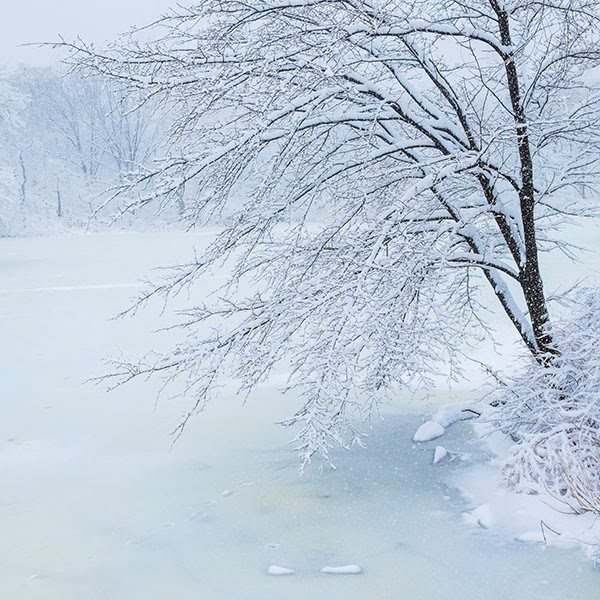
Photographing in the snow with the Fuji X-E2

The temperature in New York hovered around freezing and at times was a bit too warm for the snow that fell yesterday. With no wind the snow clung heavily on the trees and turned Central Park into a Currier and Ives wonderland. I wanted to have a very small camera kit to work in the park, and settled on my Fuji X-E2, two zooms, and the 14mm lens. It didn't take me long to begin longing for the weather resistant Fuji X-T1 I have on order because with the temperature right around freezing the snow turned to water drops as soon as they hit the camera. At one point some of the buttons on the rear of the X-E2 began performing erratically, as if they had shorted out. Turning off the camera and drying it off restored it to normal in a short time, and I was able to continue shooting the rest of the day.

I had intended to take mostly black and white images to be converted to platinum prints later. As it turned out, I didn't like the way the images converted when I began processing them in the evening. Instead I found they had a very subtle blue tint that I was able to enhance slightly by switching to the wider LAB color space in Photoshop, and giving the colors a little boost. Otherwise, nothing else was done to the colors. They are straight from the camera.

I worked with the camera set to auto exposure plus one stop of exposure compensation for the brightness of the scene.

This was one of the most prolific winter scenes I have ever photographed -- and the easiest thanks to the compact Fuji X camera kit. A few samples are below.


Taken along the Lake with the Bow Bridge in the background and West Side buildings fading into the mist.


Monday, February 3, 2014

A beauty portrait with the Fuji X-E2

This photo of the model shows her with the camera and lens I used to take most of the portraits in the shoot. Taken with a Nikon D4 and 85mm f/1.4 lens with the model completely backlit in front of a window with reflectors filling in from the front.
After finishing up a day of lifestyle shooting with one model, I took a little time to take some beauty portraits of her using the Fuji X-E2 with the 35mm Fuji lens, and Leica 50mm Summilux.  All the shots were taken using natural window light. For the two photos below where the models face is lit directly, I placed her in a door opening that allowed a little of the window light to hit just the front of her face, while the background went completely dark. The reddish close-up was lit differently. A description of its lighting is contained in the caption.

For the reddish close-up I used a Leica 50mm Summilux lens, in all the others a Fuji 35mm.


In this situation the model was placed in front of a window similar to where she is in the top photo where she is holding the camera, except that a large, black flat was placed directly behind her to provide a dark background. A large silver/gold reflector was placed to camera left, just behind the model so that it provided a rim lighting to her cheek.  A small tungsten lamp was also added behind her to create a flare and add the warm coloring. The bright catch light in the models eye was added by holding a small silver card in front of her to reflect a bit of the light into her eye.